Our Intelligence Reports
In-depth mining intelligence, data analysis and strategic insights for sustainable operations.
 Mining Intelligence
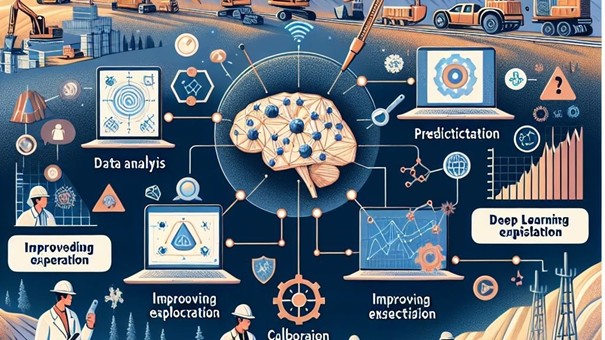
Mining Intelligence Transforms Substantially Mining Business Operations
Why Intelligent Decisioning Matters?
Every workflow is powered by decisions: approvals, validations, calculations, thresholds, risk checks, eligibility calls, next-step recommendations. When those decisions live inside hard-coded systems, everything slows down.
Data is the backbone of the mining industry. Every mine must have reliable, up-to-date information to make the best possible decisions, from first dig to end of life.
Historically, mining data has been confined to departmental silos, limiting its utility for mining organizations at large. Mining data helps gain an understanding of the "what" in data. Mining Intelligence answers the "how" and "why" to provide a comprehensive view of data. Together they enable mining companies to perform, test, and interpret sophisticated analyses quickly.
Miners can at once respond to worldwide and mine-specific challenges with evidence-based decisions, cutting through silos and interlinking various departments. This enables enhanced collaboration and knowledge sharing, while ensuring knowledge is retained across the organization even during multiple staff changes.
In the current scenario, more and more technological advancements are made in data collection. It is easy to become overwhelmed by the sheer volume of new, incredibly detailed information arriving every day. And to be confused about exactly how you are going to collect, store, and analyze it all. The reality is that not every mine has the expertise and experience it needs to complete a complex data analytics project. Yet in the current mining environment, it is becoming increasingly vital that mines use all the data at their disposal in order not just to maintain the status quo, but to get ahead in a competitive industry.
 Data Intelligence
Need for Data Intelligence in the Mining Industry
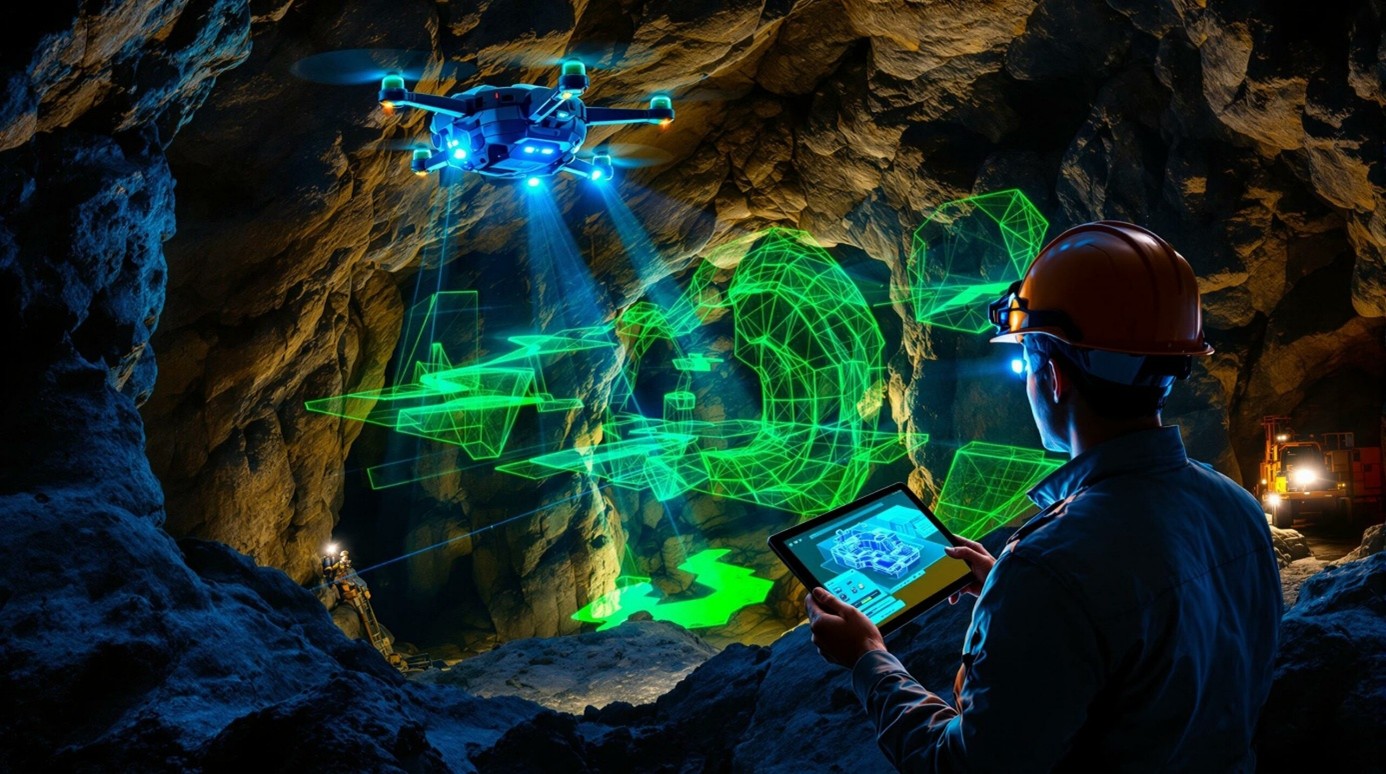
Data intelligence plays a crucial role in the mining industry for enhanced decision-making, optimizing operations, and improving safety and sustainability. Data converted into valuable information is particularly useful in key areas such as predictive maintenance, resource estimation & optimization, risk assessment, incident analysis, waste management, environmental impact monitoring, inventory management, logistics & transportation, exploration, transparency & reporting.
Embracing data intelligence in the mining industry not only drives efficiency and profitability but also fosters a safer and more sustainable approach to resource extraction. As technology continues to evolve, the potential for leveraging the right data and information will only increase.
Big Data – A Fact of Life for Mining Companies
Mines must gather a vast amount of information and verify it against economic calculations and regulatory compliance. During mine design and planning, engineers must add information about how the site will be rehabilitated and relinquished. Later, once the mine is in operation, mine-to-mill optimization demands up-to-date data from every stage of the process – such as data on the effectiveness of blast design, or on recovery rate, co-product valorization, water recirculation, waste dewatering, etc. at the processing plant to make each stage more productive and therefore more profitable.
At the same time, other data such as data related to the effect of fleet powering choices (fossil fuel, natural gas or electricity) on the mine's carbon footprint is required to ensure sustainability.
A lot of mining data today is what is known as "big data." Potentially many terabytes in size, most big data is "soft", or unstructured (qualitative) data as opposed to "hard" or structured (quantitative) data. Hard data is directly observed and measured and easily put into searchable rows and columns. Soft data includes text, video, photographs, scans, etc., as well as metadata – data without structure that cannot be put into rows and columns. To understand and take advantage of all your data, your soft data must be able to work with and be stored, viewed, and analyzed alongside your traditional hard data, such as the lithologies, assays, and other physical drilling information used in resource estimations.
 Business Insights
How Can Mining Industries Turn Data into Valuable Business Insights?
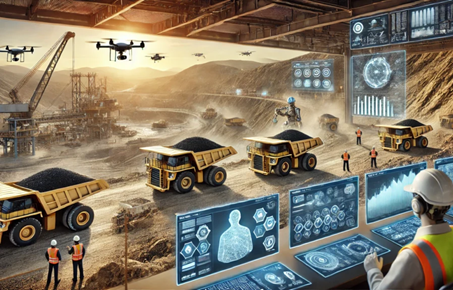
Turning data into valuable business insights through data analytics involves several key steps. Here is a structured approach that is required for business transformation:
- Identify your issues
- Collect, store, and integrate your data
- Analyze your data / define your dashboards
- Publish your data
- Share your data
Once all the data is in a single repository, it can be well organized and integrated using the most appropriate Mining Intelligence applications as detailed below:
- Index all geological data, both structured and unstructured, from various source systems
- Create a visual overview of all exploration data
- Measure, analyze, display, and share data
- Develop detailed, drilldown views of specific exploration activities, such as drilling sampling results sorted by their campaign code, status and period
- Index, analyze and report tonnages, grade, volume, material type and other metrics
- Compare multiple versions of the block model
- Share results internally with other teams or stakeholders across the mine
- Display and share specific analytics, such as an analysis of the estimated weight of ore, waste and average grade for various cut-off grades, or a comparison of the mathematical model and variogram curve from the drill hole
Index production data at source, analyze it and visualize the results using a range of standard dashboards, including dashboards that:
- Monitor production actuals against targets, or processing metrics and equipment performance
- Review stockpile balances and equipment fuel consumption
- Reveal material flow and key performance indicators